
Some pets spent half their lives in the garden: sunning on the patio, chasing butterflies, digging where they were not supposed to. For many people, that is exactly where they want to remember them. A pet memorial garden gives your grief a quiet place to go, and gives their memory somewhere to grow.
This guide walks you through creating a backyard memorial step by step: choosing the spot, planning the layout, picking plants that are safe for other pets, choosing a marker, and keeping it looking beautiful through the seasons. You do not need a big yard or garden skills. A small corner, a pot or a stone is enough.
If you are still deciding what to do with your pet’s body or ashes, read cremation vs burial for pets first, then come back.
Quick Answer: Creating a Pet Memorial Garden
- Pick a calm, visible spot you will enjoy visiting, with some shade and easy access.
- Choose a focal point: a stone, a bench, a statue or a tree.
- Plant carefully. Choose plants that are safe for other pets, and avoid lilies if you have cats.
- Check local rules before burying anything, and call before you dig to avoid utility lines.
- Add a personal touch: a name, a paw print, a favorite toy or a photo.
In This Guide
Before You Start
A memorial garden can be a place where your pet is buried, a place where ashes are scattered or buried, or simply a tribute with nothing buried at all. All three are valid. Which one is right for you depends on your situation and local rules.
- Burying a pet in the yard? Rules vary by country, state and city, and renters usually cannot bury on the property. Read our guide on how to bury a dog for depth, location and safety tips.
- Using ashes? Ashes can be buried, scattered or kept in the garden in an urn. See what to do with dog ashes for ideas.
- Just want a tribute? A garden with a stone, a plant and a quiet place to sit works beautifully on its own.
Step by Step: Building Your Garden
Choose the Right Spot
Pick a place you can see from a window or a favorite seat, with some shade and good drainage. Avoid low spots where water collects, and keep it away from wells, streams and drainage. A spot your pet loved often feels the most natural.
Set a Focal Point
Every memorial garden has something that draws the eye: an engraved stone, a small statue, a bench or a young tree. Decide this first, and plan the rest around it.
Plan the Layout
Keep it simple. A small bed, a circle of stones or a corner with a few pots is enough. Leave a place to stand or sit, since a bench or flat stone makes it easier to visit.
Add Plants and Soil
Prepare the soil, then plant your chosen flowers, shrubs or a tree. Water well, and mulch to keep the soil moist. Avoid cocoa bean mulch, which is toxic to dogs.
Place the Marker and Personal Touches
Add the stone, the name plate or the sculpture, then personal details like a paw print, favorite toy or a photo in a weatherproof frame.

Small, quiet details make a memorial feel personal.
Plants for a Pet Memorial Garden
Choose plants that are safe for any other pets who will use the yard. Many common garden plants are toxic to cats and dogs, so check the ASPCA’s plant list before you buy anything.
Pet-Safe Ideas
Roses, sunflowers, zinnias and snapdragons are commonly listed as non-toxic to cats and dogs. Herbs like thyme and basil are also generally considered safe in a garden. Always confirm each plant before you buy.
Plants to Avoid
Lilies are highly toxic to cats. Azaleas, sago palms, oleander and many bulbs, including tulips and daffodils, can harm pets. Skip them if animals use the yard.
Meaningful Choices
Many people choose a tree that grows with the years, a flower that matches the pet’s birth month, or a plant in their pet’s favorite color. A perennial returns every year, which suits a memorial.
Marker and Decoration Ideas
An Engraved Stone
A flat stone or river rock with the name and dates is simple and timeless. A paw print pressed into a stepping stone adds a personal touch.
A Statue or Figure
A small sculpture of a dog, cat or bird in their pose gives the garden a focal point.
A Bench
A small bench makes the garden a place to sit with your thoughts.
Wind Chimes and Solar Lights
Wind chimes add a soft sound, and a few solar lights make the garden glow in the evening.
A Weatherproof Photo or Plaque
A favorite photo in a weatherproof frame or a small name plaque keeps their face in view.
Their Favorite Things
A ceramic bowl as a bird bath, a collar tag hung on a branch or a toy nestled among the plants. Check that nothing could harm wildlife or other pets.
For more ideas beyond the garden, browse our pet memorial ideas.
Keeping It Beautiful
- Water and weed regularly, especially in the first year while plants settle.
- Refresh the marker. Wipe the stone each season, and touch up faded lettering.
- Plan for seasons. Mix evergreens with flowers so there is something to see all year.
- Visit on special days such as their birthday and the anniversary of their passing. Some people light a candle or place a fresh flower.
No Yard? Other Options
If you rent, live in an apartment or may move one day, you can still create a garden. A large pot with a favorite plant, a window box or a small tabletop garden with a stone works well, and it can move with you. You can also dedicate a tree in a local park or donate to a conservation project in your pet’s name, subject to local rules.
Keeping Them Close in Other Ways
A garden is wonderful for quiet visits, but it stays at home. Many people also keep a small piece of their pet with them. A tiny pinch of ashes or fur can go in pet ashes jewelry, while the rest stays in the garden. Or you can wear their portrait on a solid pendant, with nothing inside.
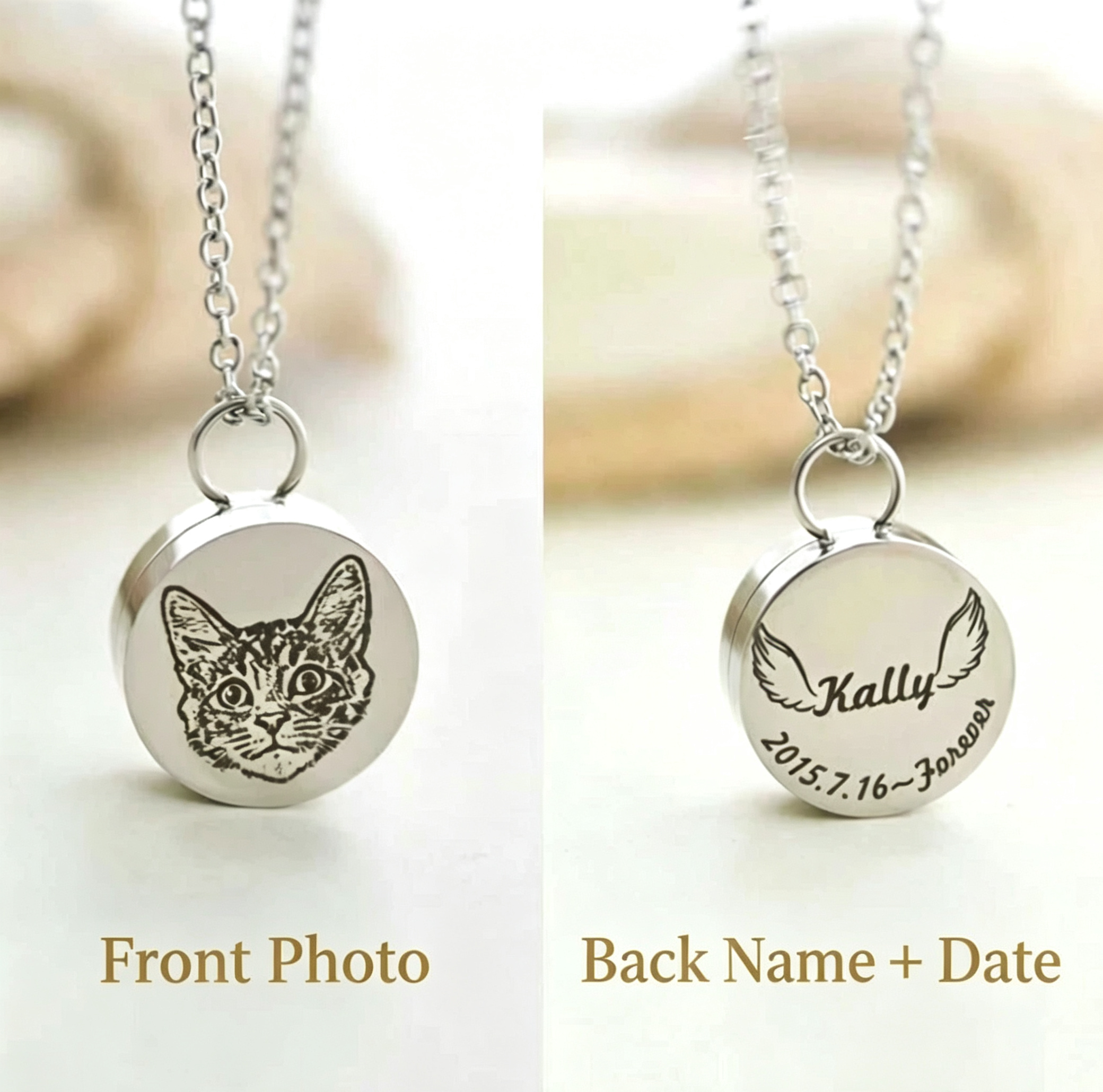
Custom Pet Portrait Urn Necklace
A round 316 titanium steel pendant that opens to hold a pinch of ashes or fur, with a 99% accurate portrait on the front. Keep the rest of the ashes in your garden, and a little of them with you.
Prefer a portrait with nothing inside? Our solid square portrait necklace carries their face every day. If you are wondering whether it is okay to keep ashes at home or in the garden, read is it bad luck to keep ashes in the house.
Frequently Asked Questions
Can I bury my pet in my backyard?
It depends on where you live. Many places allow it with conditions on depth and location, and some forbid it. Check your local rules first, and read our guide on how to bury a dog.
How deep should a pet be buried?
Many guidelines suggest at least 3 feet (about 1 meter) of soil on top, but requirements vary by location. Check your local rules, and avoid areas near water or utility lines.
Do I need a body or ashes to make a memorial garden?
No. A pet memorial garden can be a tribute only, with a stone, plants and a place to sit. Nothing needs to be buried for it to be meaningful.
What is the best marker for a pet memorial garden?
An engraved stone is the most common, because it is simple and lasts for years. A bench, statue or tree can also work as a focal point.
What flowers are safe for pets?
Roses, sunflowers, zinnias and snapdragons are commonly listed as non-toxic, but always check each plant on the ASPCA list. Avoid lilies if you have cats.
What if I move house?
Take a plant, a stone or a cutting with you, or create a small portable garden in a pot. You can also keep a small part of your pet with you in jewelry.
Looking for more guidance? Read 7 stages of grief after pet loss or what to do when your dog dies at home.

Keep Them Close Forever
The Pet Keepsake handcrafts premium pet cremation jewelry and custom portrait memorial keepsakes. We believe that love never fades, and our 99% accurate laser engravings ensure your beloved companion’s face is forever close to your heart.
More from The Pet Keepsake
Cremation GuidesHow to Bury a DogA step-by-step guide to a respectful burial.
Cremation GuidesCremation vs Burial for PetsCompare your options side by side.
Cremation GuidesWhat to Do with Dog Ashes?10 beautiful ways to honor your pet after cremation.
Grief Support7 Stages of Grief After Pet LossUnderstanding the healing process after losing a pet.
Memorial JewelryThe Ultimate Guide to Pet Ashes JewelryWhat it is, how to choose, and material comparisons.