
A small stone in the garden, a name carved into slate, a plaque by the flower bed where they used to nap. A pet memorial stone gives grief a place to go. You can visit it, tend it and watch it change with the seasons.
This guide covers the main materials and how long they last, what size to choose, what to write, where to put it and how to look after it. It also covers pet memorial plaques, for those who prefer a wall or lawn marker.
Looking for a full headstone? See our guide to pet grave markers. For the wider garden, see how to create a backyard pet memorial garden.
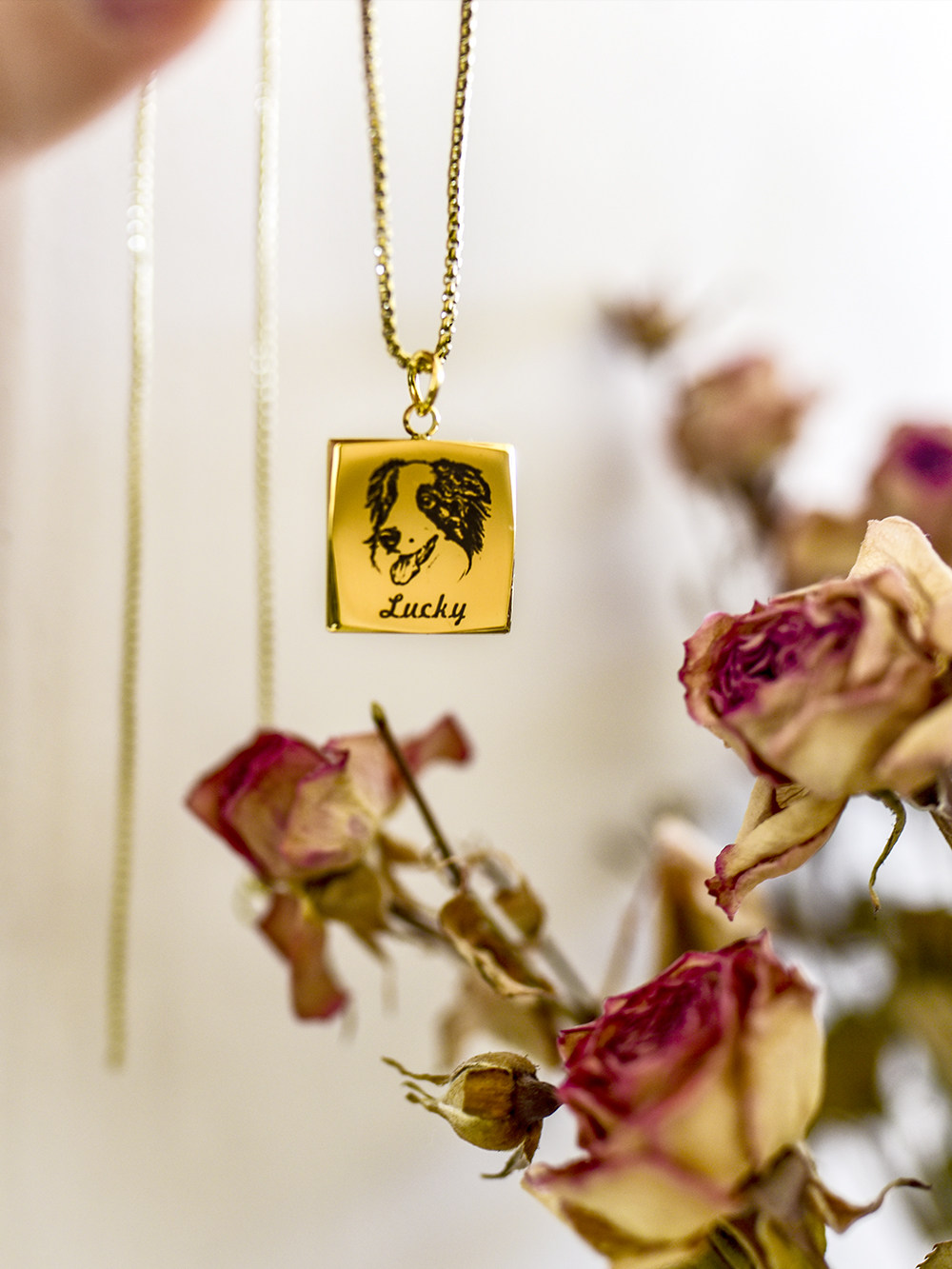
Quick Answer: Pet Memorial Stones
- Outdoors: choose granite for durability. Slate also lasts but can chip.
- Indoors: slate, ceramic, wood and metal work well.
- Wording: a name, one word for who they were, and one feeling.
- Placement: near a favorite plant or resting spot, slightly off the walkway.
- Cost: roughly $60 to $1,500 or more, depending on material and personalization.
Details come from published guides by Funeral.com, The Living Urn and Animal Paradise. Durability depends on your climate, so check with your supplier.
In This Guide
Pet Memorial Stones, Plaques and Grave Markers
The terms overlap, so here is how most people use them:
Memorial Stone
A garden or yard stone engraved with a name and message. It may be flat to the ground or a small upright piece, and it can sit anywhere you want to remember your pet.
Memorial Plaque
A flat engraved plate, often metal, granite or slate, that mounts on a wall, a post or a stone, or sits at ground level. Good for small spaces and for pairing with an urn or tree.
Grave Marker or Headstone
A larger piece placed over a burial, often in a pet cemetery or at home. Plot size and cemetery rules can limit it. See our guide to pet grave markers for sizes and wording.
Choosing a Material
Durability varies a lot, and the right material depends on where it will sit. This summary draws on Animal Paradise, Funeral.com and The Living Urn.
| Material | What to Know |
|---|---|
| Granite | Most durable outdoors. Resists frost, sun and rain, and lasts decades with little maintenance. Polished granite suits photo engraving. Heavier and costlier. |
| Marble | Softer than granite but still durable, and commonly used for pet memorials. |
| Slate | Natural, calm look. Lasts decades outdoors (roughly 20 to 40 years depending on climate), lighter and cheaper than granite. Low-quality slate can flake in hard frost, so look for natural slate at least 1 cm thick. Edges can chip if stepped on. |
| Bronze | Withstands outdoor conditions and develops a patina. Suits detailed sculpted relief. Generally the costliest. |
| Wood | Untreated wood lasts only a few years outdoors. Treated, maintained wood can last 10 to 15 years. Best for sheltered spots or indoors. |
| Resin | Holds fine detail such as paw prints, and is light and affordable. Sensitive to UV, so use partial shade and keep it away from sprinklers. |
| Ceramic | Glazed ceramic resists UV and frost, but can crack on impact. Best indoors or in a sheltered spot. |
Indoor or outdoor? For outdoors, granite or marble are the safest choices. Metals, slate and ceramic are better suited to indoor shelves or sheltered spots, where photo engravings are also less of a worry. Decide the location first, then choose the material.
Size
The Living Urn suggests these rough sizes for stones and plaques:
- Small: 3 to 5 inches
- Medium: 5 to 8 inches
- Large: 8 to 11 inches
- Extra large: 11 to 16 inches
Grave markers and headstones can be much larger and depend more on the design than on your pet’s size. If you are using a pet cemetery, the plot may limit how big the stone can be.
What to Write on a Pet Memorial Stone
Short wording stays readable. Funeral.com suggests a simple formula: name + one identity word + one feeling.
- “Milo, Best Friend, Always Loved”
- “Luna, My Shadow, Forever Missed”
Classic lines include “Forever in Our Hearts” and “Until We Meet Again”. Personal ones can feel more like your pet, for example “King of the Couch” or “Chaser of Butterflies”.
- Dates: adoption and passing dates, years only, or none. Smaller markers fit one date line best.
- Paw print: a print from your vet or a home kit can be engraved as a border or the centerpiece.
- Photo: laser engraving works best on granite and slate with a sharp, well-lit, high-resolution close-up of the face.
- Longer stories: keep them in a memory box, a framed photo or a written tribute, not on the stone.
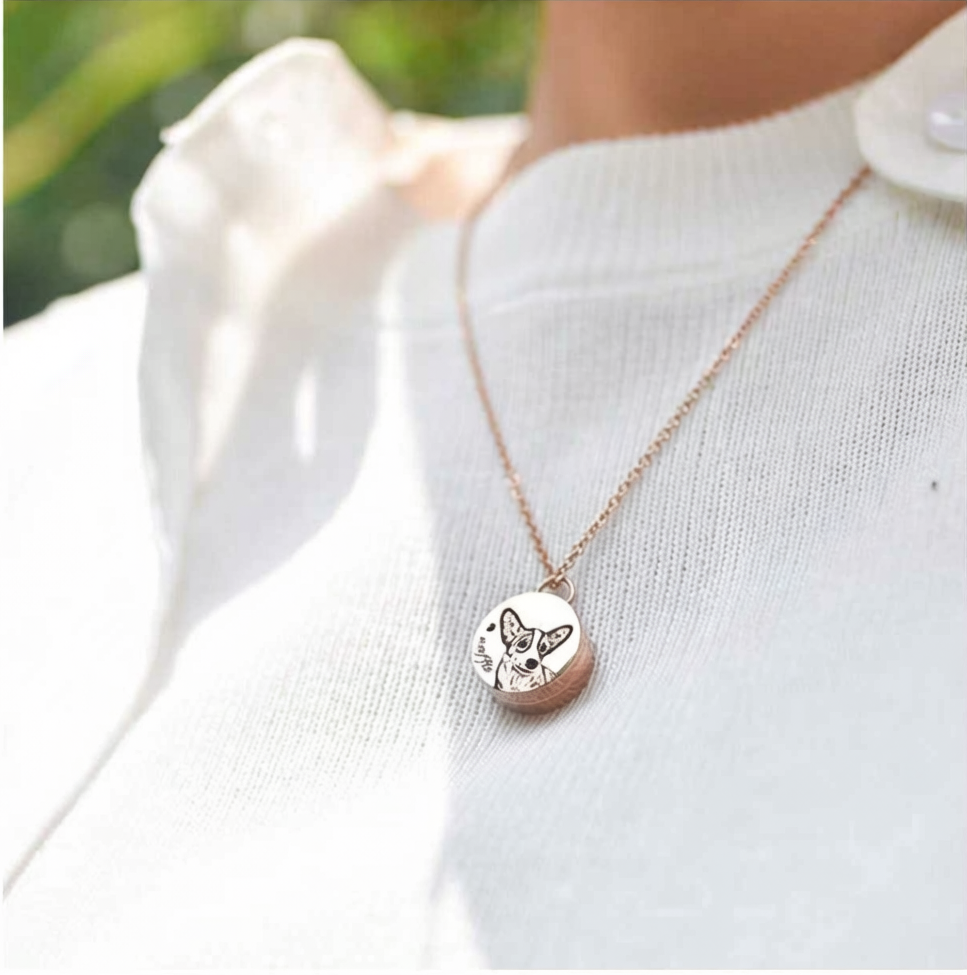
A stone stays in one place. A small keepsake can go wherever you go.
Where to Place It
- Near a favorite plant. Lavender, rosemary, a rose bush or a hydrangea adds texture and seasonal change.
- At a resting spot. Choose the place where your pet napped or watched the yard. If there is heavy foot traffic, place the stone just beside it.
- Off the main path. Keep it slightly off the tread line so no one trips. A flatter stone suits places where children play.
- Keep it simple. A ground-level stone, one textured plant and at most one accent, such as a solar light or a smooth river rock, avoids clutter.
- Make it readable. Check that the name can be read from a garden path or through a window.
- No yard? A large balcony planter, an indoor planter, or a community garden (ask permission first) can work.
If you plan any burial, check local rules first. See how to bury a dog for the basics.
Stones and Ashes
A stone can sit above a burial, mark a spot after ashes are scattered, or stand beside an urn you keep at home. It does not require ashes at all. Some memorial stones also hold ashes in a movable container, and ashes can be mixed into cement to make a stepping stone, either yourself or with a local artist, according to The Living Urn. Check local rules before scattering or burying anything. For ideas, see what to do with dog ashes and our pet urn guide.
Caring for It
- Clean with water, mild soap and a soft brush or cloth. Harsh chemicals can dull finishes or strip paint from lettering.
- Brush away leaf stains in early spring and late fall if trees shade the stone.
- If sprinkler overspray leaves mineral spots, move the stone a few inches.
- Keep resin pieces and photo inserts in partial shade, away from direct midday sun.
- Wood needs regular oiling or varnishing, and DIY wood plaques need yearly upkeep.
Carrying Them With You
A stone marks a place. If you also want something that goes with you, many people add a small keepsake, such as a portrait necklace or a piece that holds a pinch of ashes or fur. See pet ashes jewelry, pet memorial art and more pet memorial ideas.
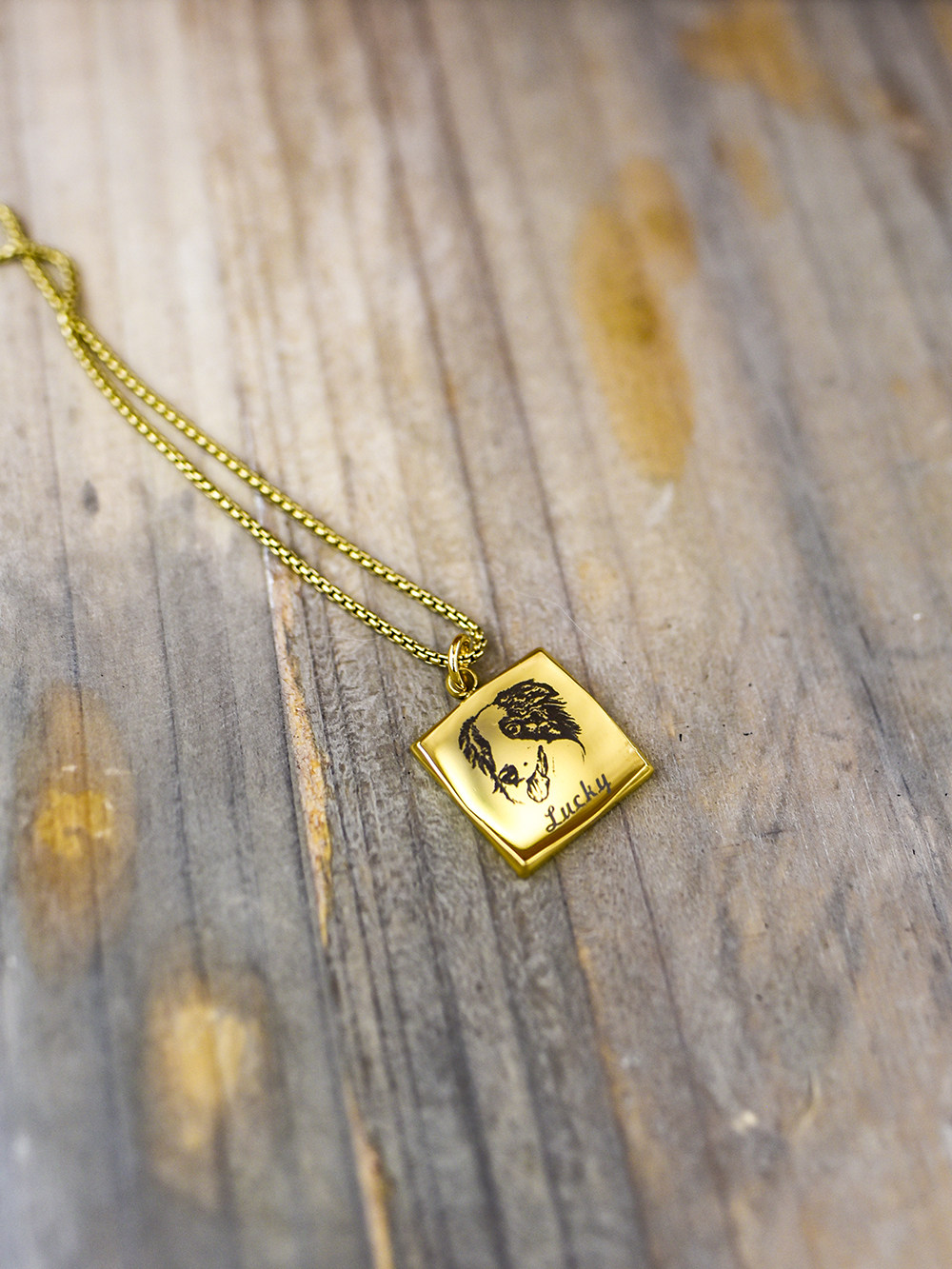
Custom Square Pet Portrait Necklace
A 316 titanium steel pendant laser-engraved from a photo of your pet, with a 99% accurate portrait. A solid piece that needs no ashes. Made to order, and nothing is made until you approve the design proof, which we send within 2 business days.
Frequently Asked Questions
What is a pet memorial stone?
A pet memorial stone is a marker, usually engraved with your pet’s name and a short message, that you place in a garden, yard or indoors to remember them. It can sit above a burial, mark a favorite spot, or stand in for a grave if your pet was cremated.
What is the best material for an outdoor pet memorial stone?
Granite is the most durable outdoors, resisting frost, sun and rain. Slate also lasts for decades but can chip or flake in hard frost. Resin holds fine detail but is sensitive to UV, so keep it in partial shade.
What size should a pet memorial stone be?
One guide suggests about 3 to 5 inches for small pets, 5 to 8 inches for medium, 8 to 11 inches for large and 11 to 16 inches for extra large. Pick a size that stays readable from where you will see it, and check any cemetery plot limits.
What do you write on a pet memorial stone?
A simple formula is the name, one word that says who they were, and one feeling, such as “Milo, Best Friend, Always Loved”. Classic lines include “Forever in Our Hearts” and “Until We Meet Again”. Dates can be the full dates, years only, or left off.
Can I put a photo on an outdoor pet memorial stone?
Yes, but choose carefully. Laser photo-engraving works best on polished granite or slate, using a sharp, high-resolution close-up of the face. Photos outdoors can weather, so ceramic or metal inserts and partial shade help.
Where should I place a pet memorial stone?
Near a favorite plant or the spot where your pet liked to rest, slightly off the main walkway so it is not stepped on. Make sure the name is readable from a path or window. If you have no yard, a large planter or balcony works.
How much does a pet memorial stone cost?
Prices range from about $60 to $1,500 or more, depending on size, material, design and personalization. Simple engraved slate costs less than polished granite with photo engraving or a sculpted bronze piece.
Do I need ashes to have a pet memorial stone?
No. A stone can stand alone as a place to remember your pet, sit beside an urn at home, or mark a spot after ashes are scattered or buried. See our guide to pet urns if you are still deciding what to do with ashes.
Sources: Funeral.com (pet memorial stones and garden markers), The Living Urn (choosing a pet memorial stone) and Animal Paradise (pet memorial plaque engraving).

Keep Them Close Forever
The Pet Keepsake handcrafts premium pet cremation jewelry and custom portrait memorial keepsakes. We believe that love never fades, and our 99% accurate laser engravings ensure your beloved companion’s face is forever close to your heart.
More from The Pet Keepsake
KeepsakesBackyard Pet Memorial GardenA tribute at home.
KeepsakesPet Memorial IdeasWays to remember them.
KeepsakesPet Urns: Size, Material & StyleHow to choose the right one.
KeepsakesPet Memorial Art7 ways to honor them through art.
Pet LossHow to Bury a DogWhat pet owners need to know.